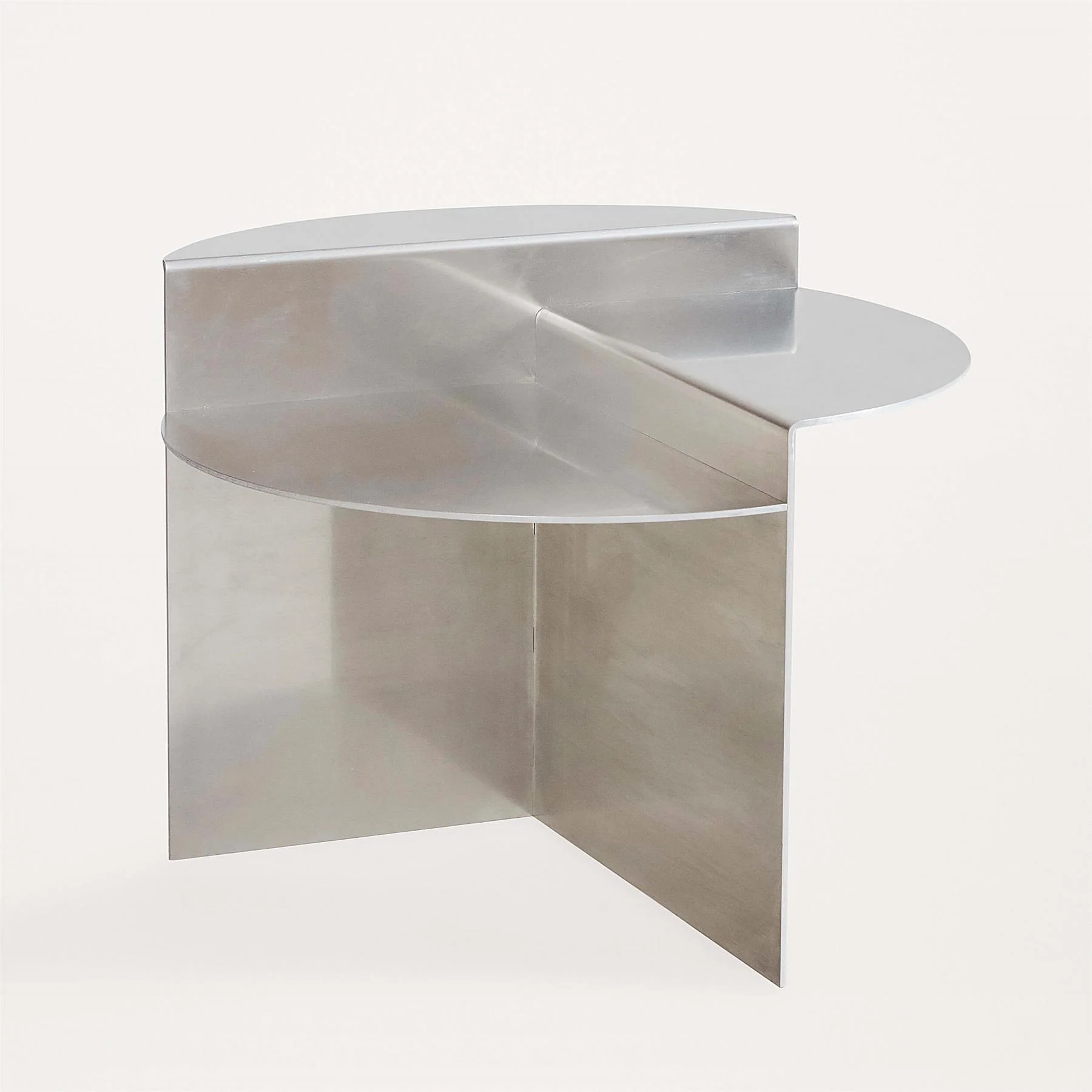
Frama Rivet Side Table
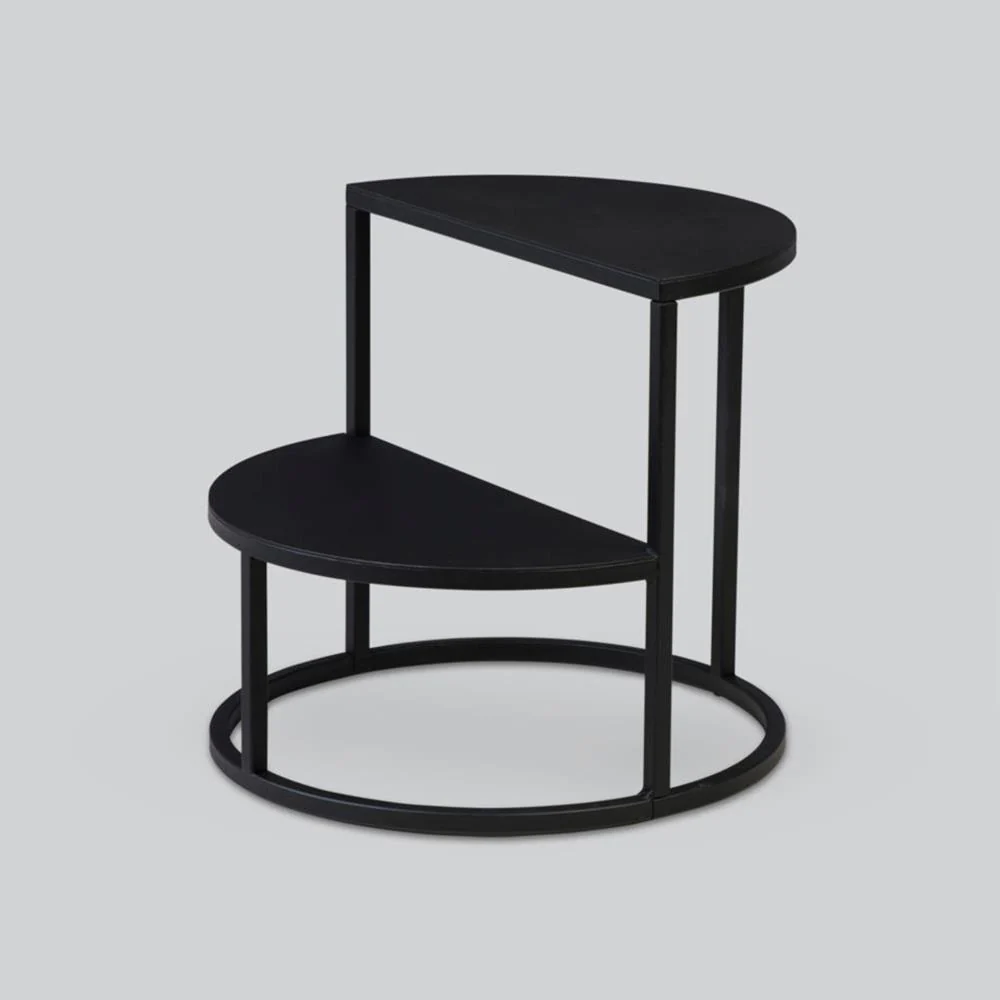
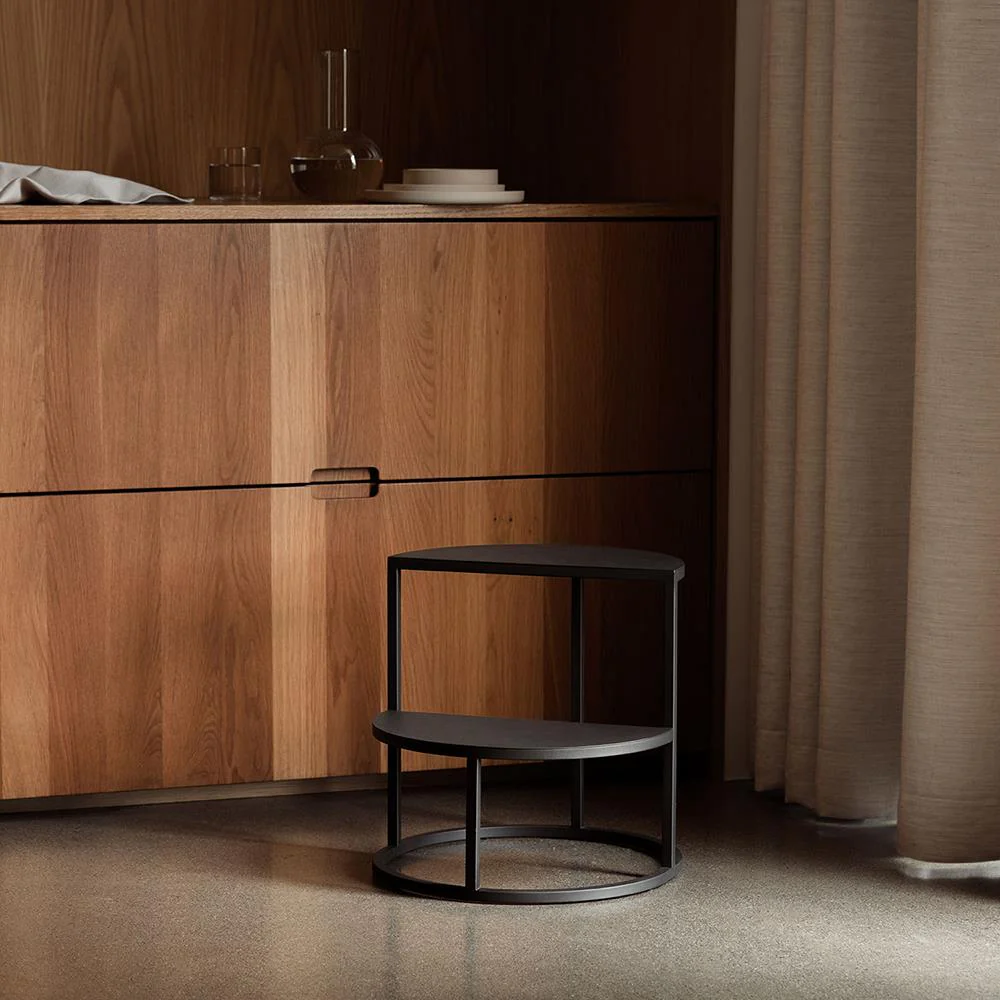
The Rivet Side Table by Frama is a compact and sculptural piece crafted from untreated, laser-cut aluminium. Its circular top is divided into three stepped levels, offering a subtly tiered surface that adds visual interest and practical variation for displaying or storing small items. The design is functional yet expressive, making it suitable as a side table, bedside stand, or standalone accent in any room.
Each table is hand-assembled in Denmark using a cold-forming process developed by designer Jonas Trampedach in 2011. The technique involves manually riveting raw aluminium sheets together to form clean, perpendicular joints without welding. The 4mm thick aluminium develops a natural patina over time, adding to its raw, industrial character.
The Rivet Side Table by Frama is a compact and sculptural piece crafted from untreated, laser-cut aluminium. Its circular top is divided into three stepped levels, offering a subtly tiered surface that adds visual interest and practical variation for displaying or storing small items. The design is functional yet expressive, making it suitable as a side table, bedside stand, or standalone accent in any room.
Each table is hand-assembled in Denmark using a cold-forming process developed by designer Jonas Trampedach in 2011. The technique involves manually riveting raw aluminium sheets together to form clean, perpendicular joints without welding. The 4mm thick aluminium develops a natural patina over time, adding to its raw, industrial character.
Description
The Rivet Side Table by Frama is a compact and sculptural piece crafted from untreated, laser-cut aluminium. Its circular top is divided into three stepped levels, offering a subtly tiered surface that adds visual interest and practical variation for displaying or storing small items. The design is functional yet expressive, making it suitable as a side table, bedside stand, or standalone accent in any room.
Each table is hand-assembled in Denmark using a cold-forming process developed by designer Jonas Trampedach in 2011. The technique involves manually riveting raw aluminium sheets together to form clean, perpendicular joints without welding. The 4mm thick aluminium develops a natural patina over time, adding to its raw, industrial character.